

Seaford AF Cream: Demonstrated pain reduction and healing.
Seaford AF Cream delivered superior pain relief and healing vs lidocaine + hydrocortisone ointment1,2*
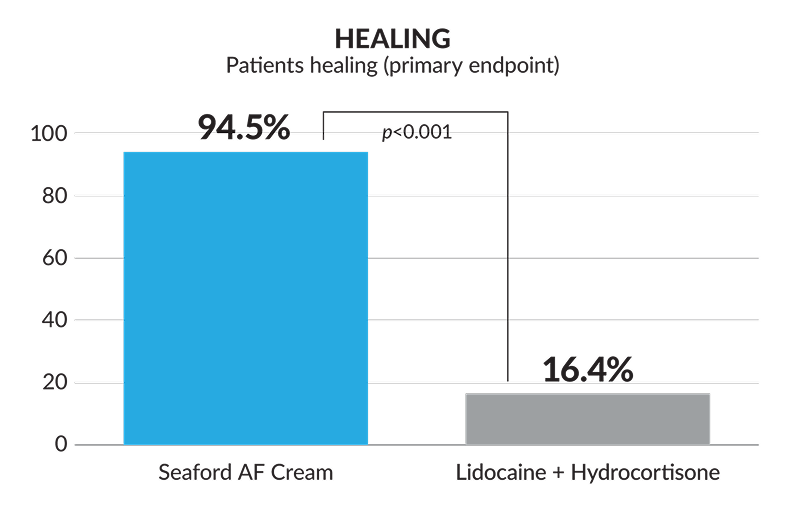
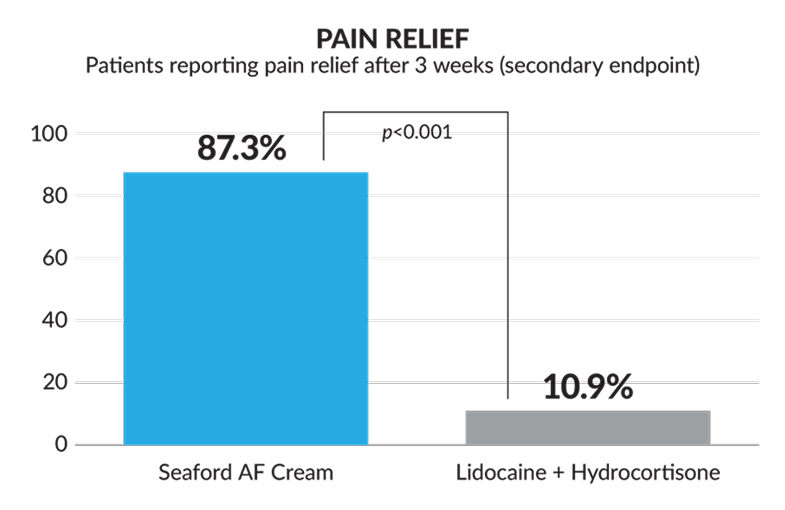
Adapted from the Seaford AF Cream Product Monograph.1

11% reduction in resting anal pressure
was seen at 3 weeks vs. baseline1
(47.2±14.6 mmHg vs. 42.0±12.4 mmHg at Week 3; p<0.002; secondary endpoint)
Seaford AF Cream has a dual action to help promote healing and relieve acute pain.
Nifedipine relaxes the internal anal sphincter while lidocaine relieves acute pain1,3
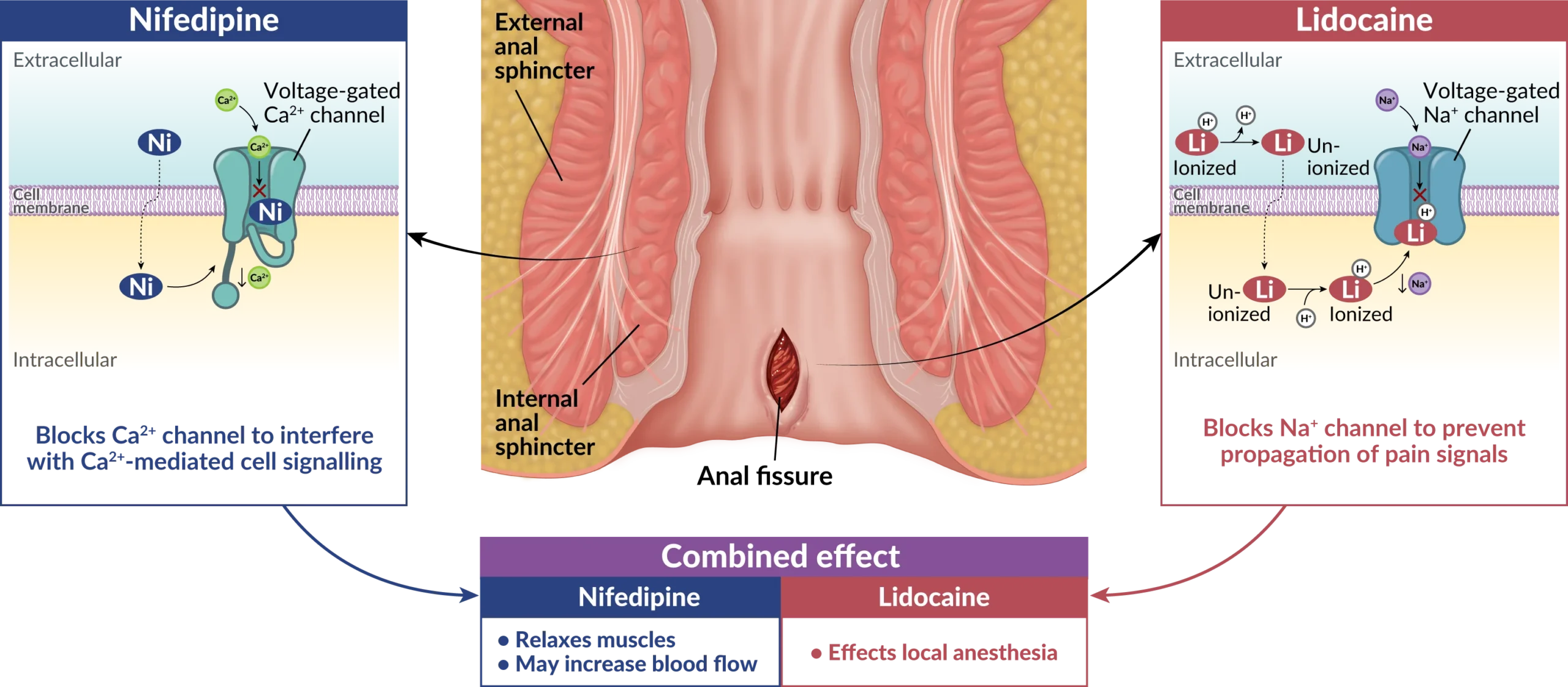
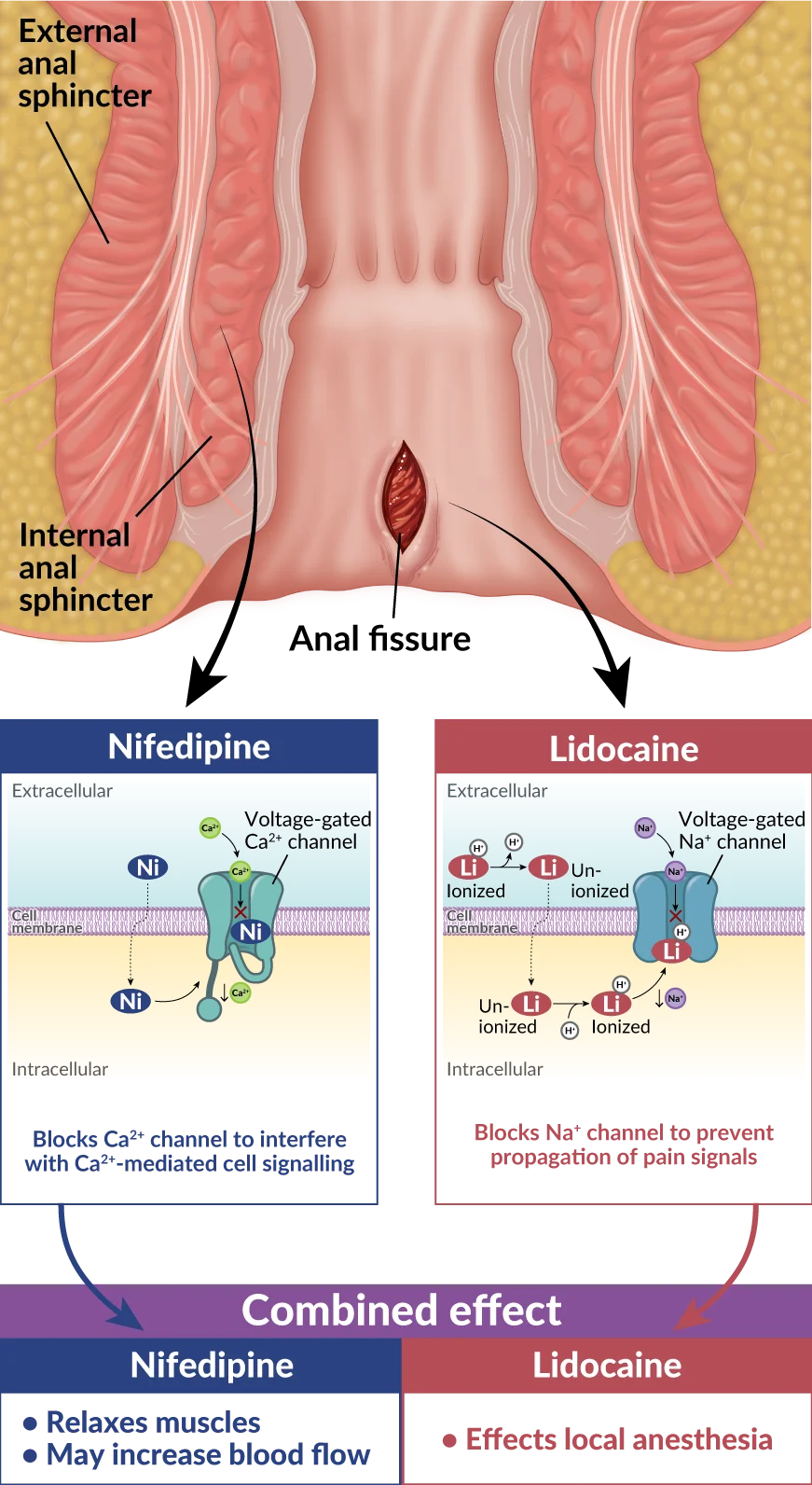
Adapted from Gallo G, et al.3
Clinical significance has not been established. The exact mechanism of action is not fully understood.
Aiming for AF healing? Start with 5 tubes.
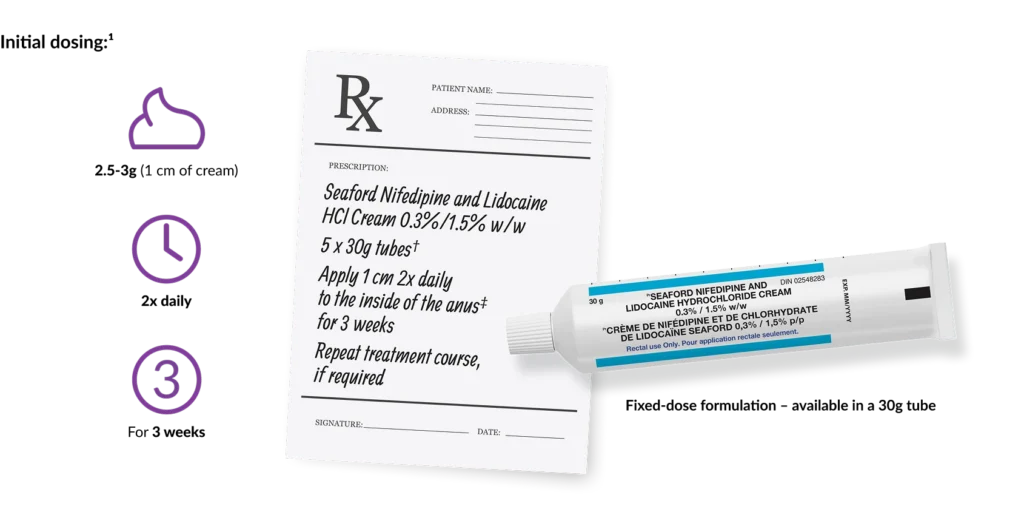
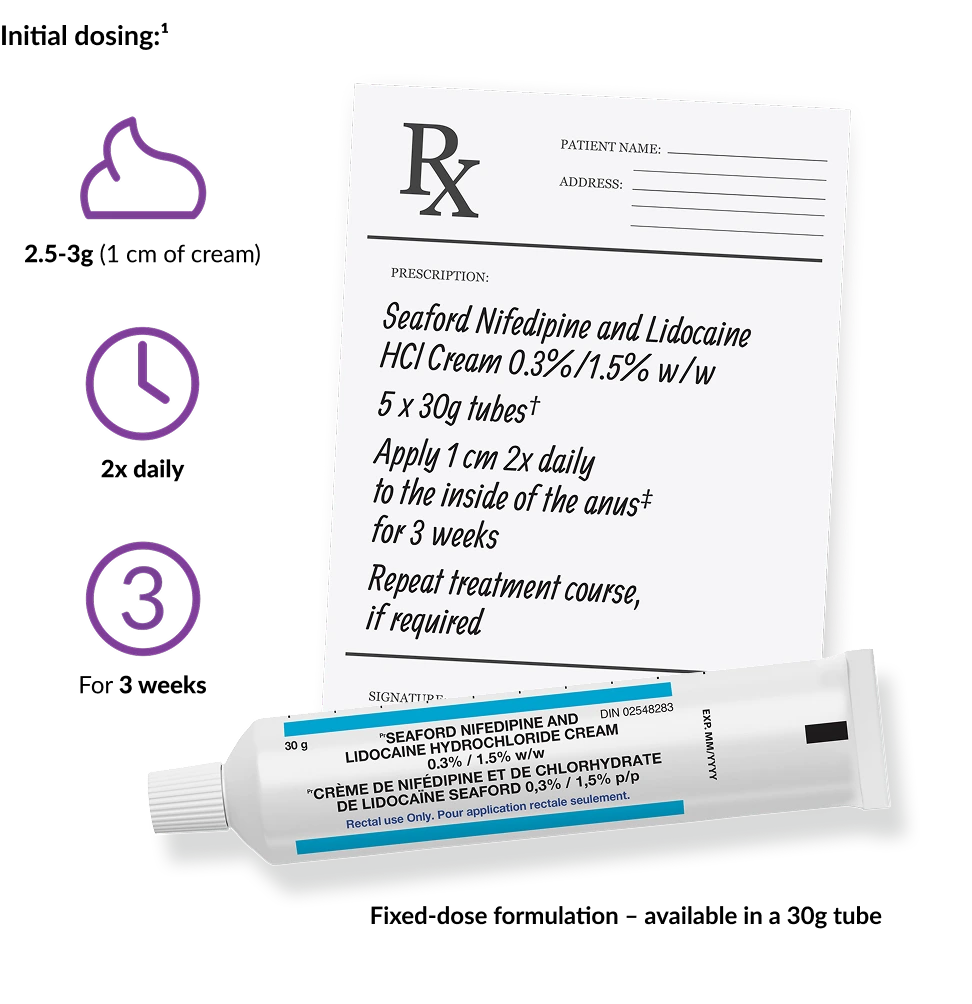
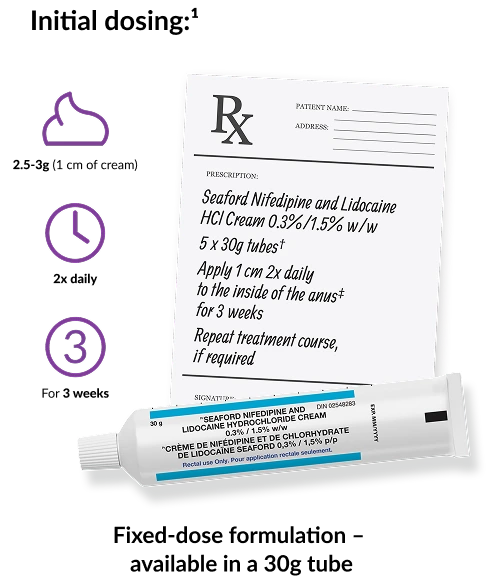
† 6g/day for 3 weeks (21 days) equals 126g total (4.2 30g tubes).
‡ And, if needed, around the anus.
How to apply Seaford AF Cream.
To properly apply Seaford AF Cream, instruct your patients to do the following:
Preparation
- Gather the following:
- 30g tube of Seaford AF Cream
- Applicator, with cap
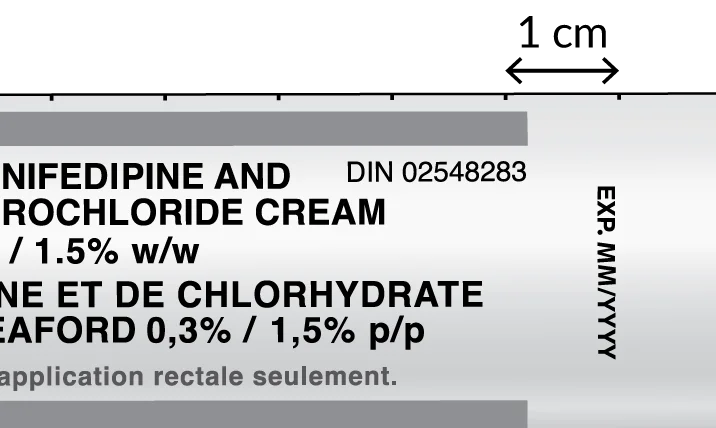
Important:
The Seaford AF Cream tube has markings on the side about 1 cm apart. Each of these represents a single dose of cream.
- Attach the applicator:
- Remove the top from the tube of Seaford AF Cream
- Screw the applicator onto the opening of the tube of cream
- Make sure it’s firmly attached so it doesn’t leak
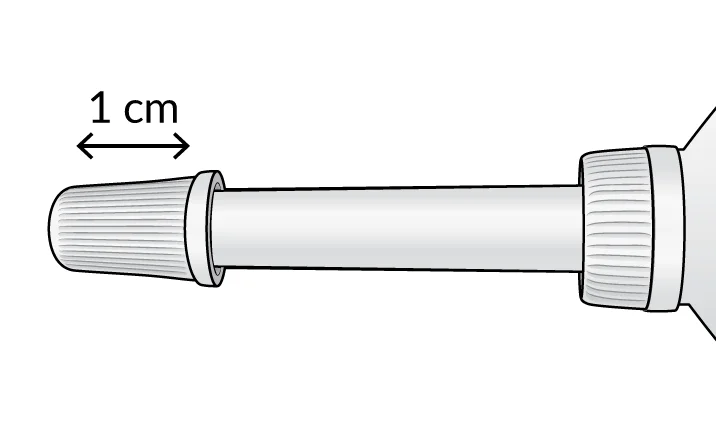
Important:
The length of the cap on the applicator is about 1 cm long.
This is how far patients will insert the applicator into the anus when they administer the cream.
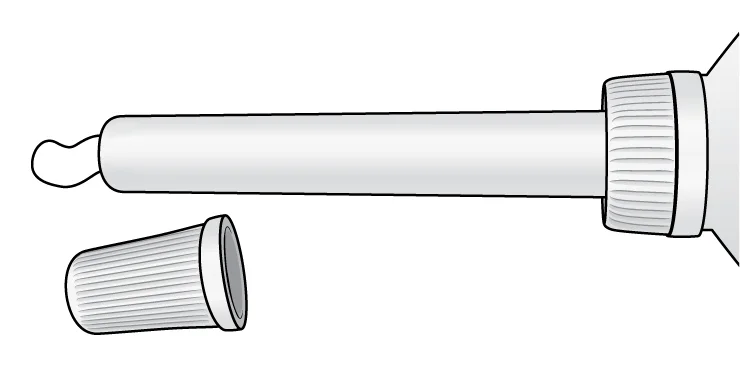
- Lubricate the applicator tip
(optional but recommended)
- Remove the cap and gently squeeze the tube until the entire applicator tip has cream inside it. Do not fill it completely – just enough so a small amount appears at the end
- Apply a small amount of the cream to the outer surface of the applicator. This reduces discomfort when inserting
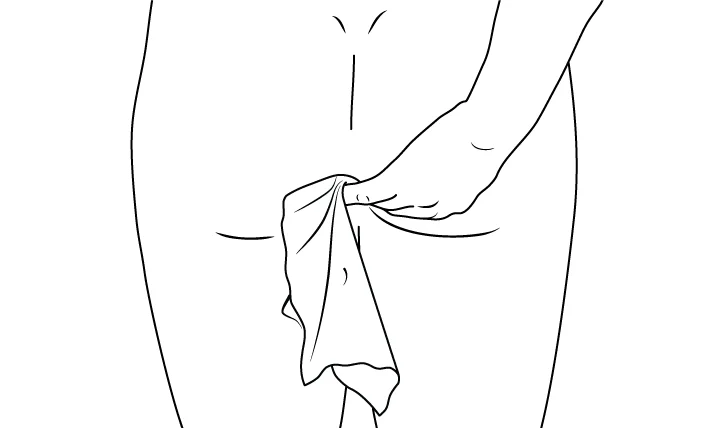
- Thoroughly clean and dry the anal/rectal area
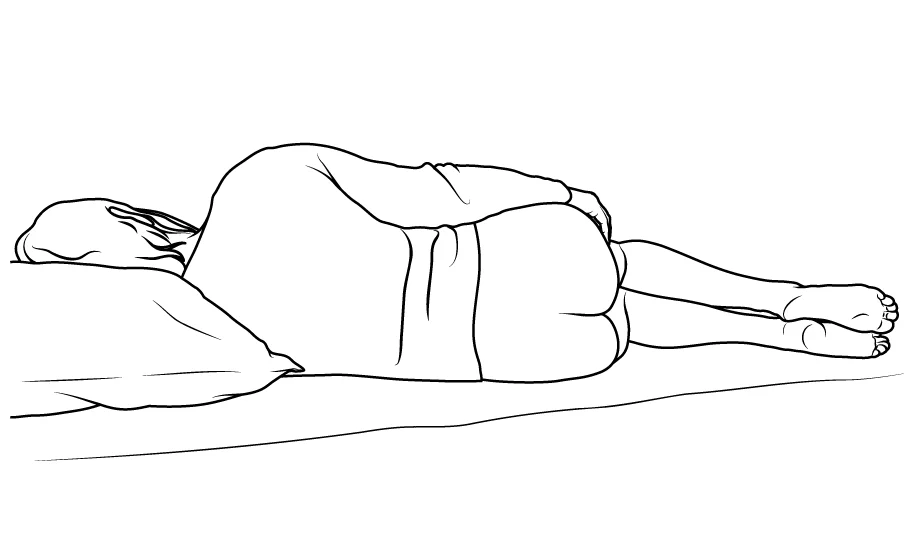
- Lie down on your left side in a comfortable place with your knees pulled slightly towards your chest.
Applying the dose
- Insert the tip of the applicator into the anal canal – up to 1 cm.
- Do NOT insert fully – the design ensures the holes near the end of the applicator base the cream without deep penetration
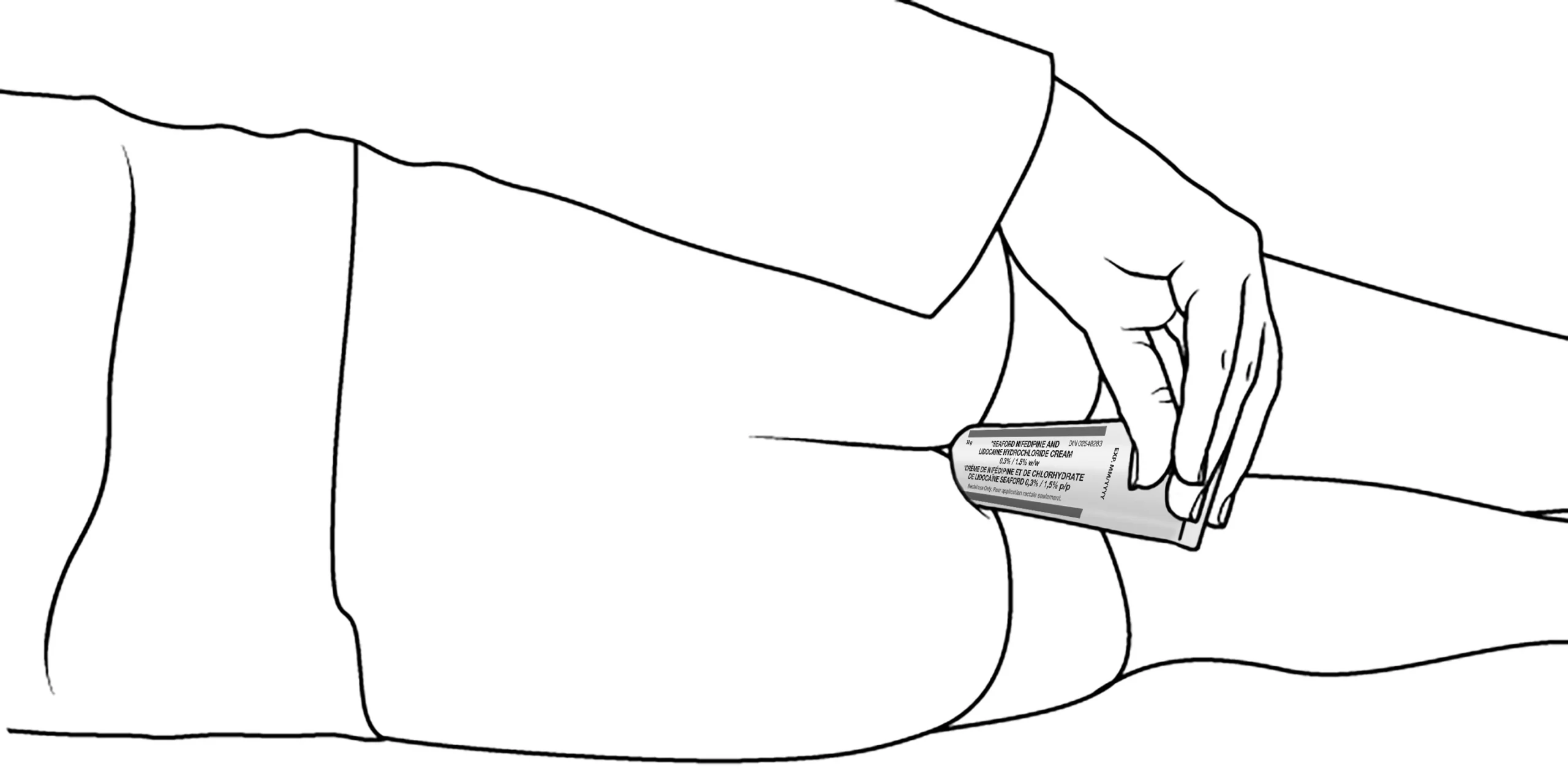
- Gently squeeze the tube from the bottom for 2-3 seconds to release 1 cm of cream.
- Try to visualize the markings on the tube and only release the cream until the next marking on the tube is reached. The cream exits through the end of the tip to coat the anal canal internally.
- Withdraw the applicator and remain on your side for 3 to 5 minutes.
Cleaning up
- Unscrew the applicator from the tube and wash it with warm water and soap. Dry well, and store for reuse.
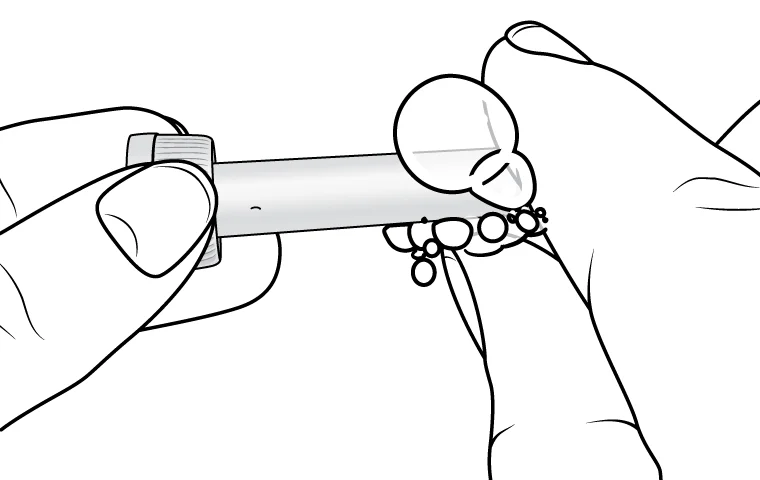
- Place the cap back on the tube
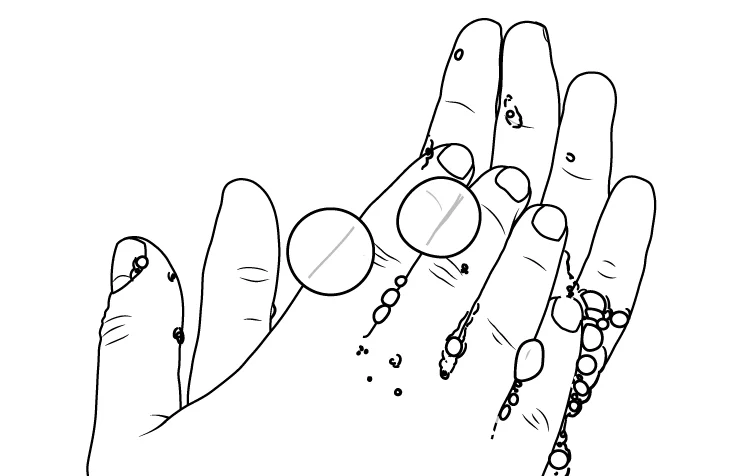
- Wash your hands with soap and water
Instruct patients to apply:

1 cm of cream

Twice a day

For 3 weeks
Save and print a copy of this information for your patients
Download now
Seaford AF Cream was generally well tolerated – even in patients with injured anorectal mucosa.
In study P001/98 (55 patients with chronic AF):1-3

No systemic side effects, anorectal bleeding, or postural hypotension
No patient study withdrawals due to side effects

No significant difference between pretreatment & treatment average diastolic blood pressure levels
In study Antro-0206 (135 patients with damaged anorectal mucosa following anorectal surgery):1

One case of drug discontinuation due to headache
No deaths or serious adverse reactions were reported
Most common (≥5%) AEs were headache (8.9%), nausea/vomiting (8.1%), anal burning/pruritus (5.9%), and vertigo (5.9%)1
View information
on serious warnings and precautions about methemoglobulinemia
AE=adverse event; AF=anal fissure.
*
Study P001/98 was a randomized double-blind parallel controlled study conducted in 110 patients aged 18 years and older with chronic anal fissure. Patients were mainly males (72%) with no underlying pathology or concomitant local condition, such as neoplasms, fistulas, perianal abscess, or prolapse. Patients had a history of anal pain for at least two months despite treatment with stool softeners and topical anesthetic agents. Patients were randomized into two treatment groups to receive either Seaford Nifedipine and Lidocaine HCl Cream or a control ointment (hydrocortisone acetate 1% with lidocaine 1.5%). The participants administered 3 g of ointment twice daily for 3 weeks and lay on the left side on the bed for three to five minutes. The primary efficacy endpoint on day 21 of treatment was healing of the fissure with epithelialization or scarring.
References:
- Seaford Nifedipine and Lidocaine Hydrochloride Cream. Seaford Pharmaceuticals Inc. June 13, 2025.
- Gallo G, Trompetto M. Clinical evidence and rationale of topical nifedipine and lidocaine ointment in the treatment of anal fissure and hemorrhoidal disease. Minerva Surg. 2025;80(2):177-192.
- Perotti P, et al. Topical nifedipine with lidocaine ointment vs. active control for treatment of chronic anal fissure. Dis Colon Rectum. 2002;45(11):1468-1475..